Sunday, June 5, 2016

Called


But when God, who from my mother’s womb had set me apart
and called me through grace….
O Lord, Paul’s soul was dead.
Through your grace, you called him back to life, to live in you.
Christ, call us.
Through these words, call us to your love and to your grace.
And let that call be enough for us.[1]
Amen.

Paul is a fascinating character in scripture. Fascinating, frustrating, fanatical – a lot of people have used a lot of F words in relation to Paul. One description I might choose is “full of himself.” In our passage today, Paul claims that God “was pleased to reveal the Son in me” and, at the very end, he says, “They glorified God because of me.”
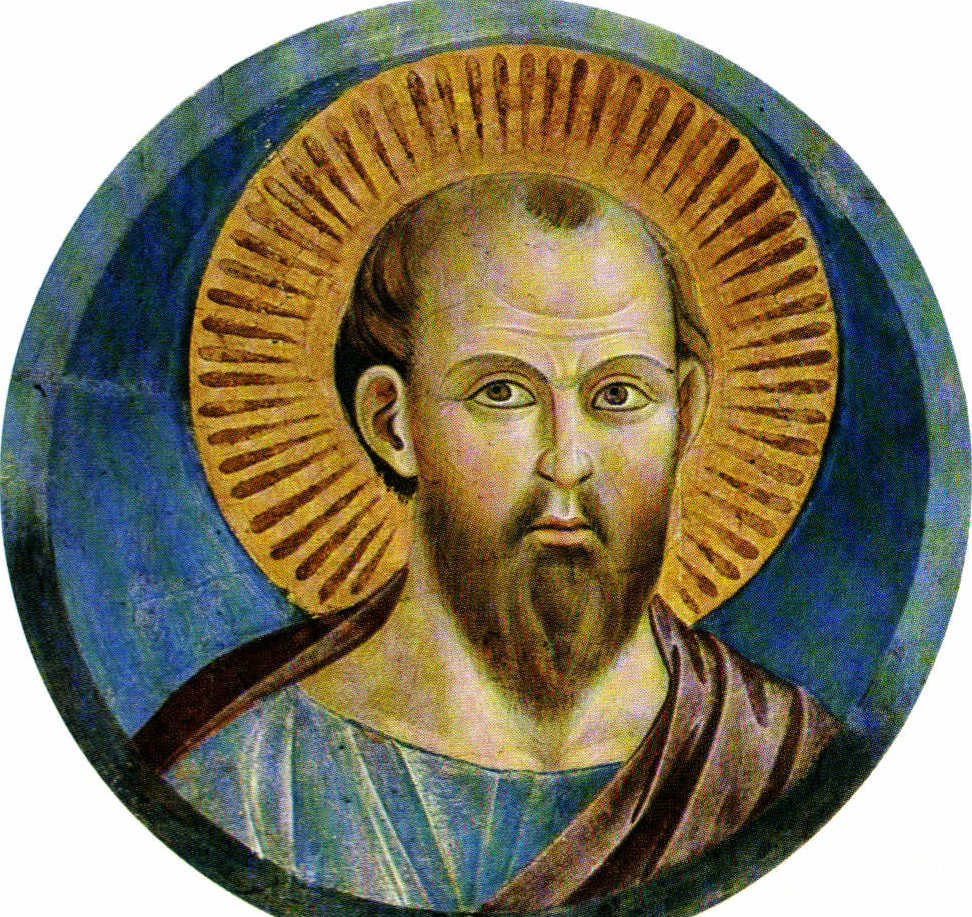
Paul sounds pretty infuriating! Not the kind of guy you’d want to invite over for dinner. In fact, this letter, which Paul sent to the church he founded in Galatia, was written in response to a group that was trying to tell people to ignore him altogether. Even today, there are Christians who would be happy to take such advice – based on Paul’s words about women not teaching within the church and his support for slavery, to name just a few items. 

But that would be difficult, as thirteen books in the New Testament bear his name. It would also be a great loss; scholar Richard B. Hays explains that “Both [Saint] Augustine and Martin Luther ... took their bearings from Paul’s message of radical grace, apart from works of the Law. The letter to the Galatians is the fountainhead for all [thought on] justification by faith, the cross, the power of the Spirit, and the meaning of Christian freedom.”[2]

These are, obviously, crucial components to our faith in – and understanding of – Christ. So, it seems, we are stuck with this insufferable figure. But maybe if we take a closer look, we’ll discover some of Paul’s redeeming qualities. Perhaps we’ll see why God would call such an odd figure to turn away from destroying the emerging church and turn toward shaping and guiding it.

Before he was Paul, he was Saul, a Jewish man who was passionately devoted to his faith. In his letter to the church at Phillipi, he gives his credentials: “If anyone else has reason to be confident in the flesh,” he writes, “I have more: circumcised on the eighth day, a member of the people of Israel, of the tribe of Benjamin, a Hebrew born of Hebrews; as to the law, a Pharisee; as to zeal, a persecutor of the church; as to righteousness under the law, blameless.”

I can’t stress this enough: all these qualifications are evidence of another F word we can apply to Saul: faithfulness. Perhaps even his acts to “persecute” the movement that was taking shape after Jesus’ death and resurrection!

Imagine, today, if an influential Christian got on television and said, “Christianity is all about meeting your own needs first. If you have time left over, then you can think about helping the poor.” That runs in stark opposition to what we actually believe, and I would hope that we would all reject such teachings. Saul felt Jesus’ teachings were opposed to the traditional practice of Judaism, and he reacted accordingly; still, I hope none of us would resort to his methods.

The book of Acts tells us Saul was present during the stoning of Stephen, the first Christian martyr, and that he “approved of their killing him.” It also says that he was “ravaging the church by entering house after house; dragging off both men and women, and committing them to prison.” He even went to the high priest to ask permission to go to a place called Damascus, just in case there were any of Jesus’ followers there. He got permission and set off on his journey, and that’s when everything changed for him.

As Saul was getting close to Damascus, a light from heaven flashed around him. He fell to the ground and heard a voice saying to him, “Saul, Saul, why do you persecute me?” He asked, “Who are you, Lord?” The reply came, “I am Jesus, whom you are persecuting.” Saul opened his eyes and, to his horror, he couldn’t see anything. His companions helped him stumble into Damascus, where he remained blind for three days.

Meanwhile, God called to another disciple, named Ananias, telling him to go restore Saul’s sight. Ananias was, understandably, a little concerned about this request. “Lord,” he replied, “I have heard from many about this man, how much evil he has done to your saints in Jerusalem; and here he has authority from the chief priests to bind all who invoke your name.” But God said to him, “Go, for he is an instrument whom I have called to bring my name before Gentiles and kings and before the people of Israel.”

So Ananias went to the man who, just three days before, would’ve killed him. And he laid his hands on Saul and said, “The Lord Jesus has sent me to you.” And something like scales fell from Saul’s eyes, and he was no longer Saul, the persecutor; he was Paul, the apostle.

There are moments in our lives when God breaks in, disrupting everything we thought we knew, turning the world upside down for us. Sometimes these moments come with a blinding light and a flash from the heavens. More often, though, they come quietly, innocuously – but no less shockingly. These are the moments in which we are called by God. 

The poet David Whyte writes about these moments:

Sometimes,
if you move carefully through the forest
breathing like the ones in the old stories
who would cross a shimmering bed of dry leaves
without a sound,
you come to a place
whose only task
is to trouble you
with tiny but frightening requests
conceived out of nowhere
but in this place beginning to lead everywhere.
Requests to stop what you are doing right now
and to stop what you are becoming while you do it,
questions that can make or unmake a life,
questions that have patiently waited for you,
questions that [will not] go away.
[3]

When have these questions come to you?

One of them came to me, not out of a burning bush or a lightning bolt from the sky, but out of the mouth of a friend – a mentor – named Doug. He was the director of music at the church where I ended up doing my internship, and also the leader of the Wednesday afternoon children’s program. “Hey,” he said one day, “Would you mind helping me out for a few weeks? I need someone who knows how to use a digital camera. We’re going to be learning about the transfiguration.”

I had never worked with children before – I’d never so much as babysat a cousin! The very concept was terrifying! But, for some reason, I said yes. The initial four weeks turned into eight weeks and, ultimately, three years of working with Doug and the kids, and I discovered gifts I never would’ve guessed I had: the ability to patiently sit with a child who was melting down in a crying fit; the ability to connect with kids on their level and talk to them about important things; the ability to listen to parents’ joys and worries.

You may have already guessed what I couldn’t possibly have known at the time: that question – “Can you help me out for a few weeks?” – was preparation for the career I now have as a chaplain working with children – and for my calling as a father.

You see, God’s call isn’t just for apostles like Paul; so often we use the term “calling” to refer only to ordained ministry. But God’s calling is for all of us. Farmers, nurses, teachers, writers, appliance salesmen, garbage collectors, students, husbands, wives. 

Author Frederick Buechner puts it this way: “The kind of work God usually calls you to is the kind of work that you need to do and that the world needs to have done. … The place God calls you to is the place where your deep gladness and the world’s deep hunger meet.”[4]

Saul only got half the equation right. His deep gladness was in spreading a message. But it was the wrong message. It was a message of legalism and uncharity. The world was starving for a message of grace and inclusion, and that’s when God stepped in.

When Paul said that God had “revealed his Son in me” he wasn’t being boastful or arrogant. He was pointing out that Jesus is revealed in all who are shaped by God’s calling; that Jesus is revealed in the radical changes that come over a person when he or she begins to listen to that still, small voice; that Jesus is revealed when the task in front of you seems impossible, but you decide to trust God and give it your all anyway.

So… What questions have been wriggling around in the back of your mind lately? What prompting or guidance or urging do you sense? What is it that God has put in your heart to do or to be? What does the world need from you?

I hope you’ll think about it this week, and then come back here on Sunday and let us know: To what are you being called?

Amen.


[2] Richard B. Hays “The Letter to the Galatians” in The New Interpreter’s Bible, vol. XI (Nashville: Abingdon Press, 2000), 183.
[3] David Whyte, “Sometimes” in Everything is Waiting for You (Langley, WA: Many Rivers Press, 2003), 4.
The last line was originally “questions that have no right to go away.”
[4] Frederick Buechner, “Vocation” in Beyond Words (New York: HarperSanFransisco, 2004), 404-405.

Sunday, May 29, 2016

Christians in a World of Religious Pluralism


A sermon by the Rev. Gordon Lindsay

The contrast between the two Scripture readings that our lectionary assigns for this Sunday can hardly be more stark. One comes from the Old Testament; the other from the New Testament.

The Old Testament reading tells the colorful story of the prophet Elijah’s contest with the prophets of Ba’al on Mount Carmel. Moviemakers love this kind of story. It has conflict. It has blood and gore. It has touches of humor. It has a towering hero, the prophet Elijah. And it has an awesome resolution.


But is it edifying? It seems to operate from a mindset that Biblical religion is in a death struggle with other religions. And for the 450 prophets of Ba’al, it actually ends in murderous violence. Is this not a text that seems to justify the spirit of holy war against the infidel?

We encounter a very different spirit in the New Testament reading. In it Jesus receives a petition from a Roman soldier asking him to heal a slave who is near death.

The one asking is a religious outsider. He is not Jewish. He is a Roman, presumably a pagan in his official religious affiliation.

Yet he feels no hostility to Judaism. Instead he seems to admire it. He builds a synagogue for the local Jewish community. He has cultivated such warm ties with the local Jews that they plead his case with Jesus.

Jesus does not rebuff his petition. Jesus grants it, along with some high praise for a Gentile. “I tell you, not even in Israel have I found such faith,” Jesus says to the crowd following him. His words must have startled the crowd.  

Superficially these two stories seem to confirm the common perception that the God of the Old Testament is a God of wrath and judgment and the God of the New Testament is a God of love and compassion.

I maintain that that perception is a distortion of the two testaments. Most people who speak it have never taken time to read either testament in any depth and wrestle with the complexities found in both.

The distortion has fed a lot of anti-Judaism in Christian church life. It is important, therefore, that we come to understand it as a distortion and discard it.

The two readings, however, do exemplify two different ways of responding to religions different from our own. Is one way right and the other wrong?

Or do both passages have something important to contribute to a Christian understanding of how we can and maybe should relate to other religious faiths? That second question expresses the theme I want to talk about this morning, if only rather briefly.

The question of how Christianity should relate to other religions is an important one in our world, because we live in a world of religious pluralism. Relationships between differing religions have become a literal life-and-death matter for many of us.

The first thing I want to say is that I think most Christian discussions about other religions begin with the wrong question. That question is: Can adherents of other religions be saved?

I believe that is the wrong question to ask for two reasons. The first is that it assumes that salvation means going to heaven when we die. Salvation is all about what will be our eternal fate as individuals when we come to the Last Judgment. Will be it eternal life in heaven or eternal death in hell?

This understanding of salvation, I believe, misses the heart of the Bible’s witness. As the preacher Barbara Brown Taylor puts it, “Salvation [in the Bible] is not about earthlings going up but about heaven coming down…Heaven may be God’s test kitchen, but the pudding is intended for earth.”[1]

In the Old Testament, salvation is primarily about a quality of life experienced here on earth. It is a quality of life in which life is abundant, wholesome, and harmonious.

A quality of life in which rulers are just, judges are honest, the economy is equitable, peace reigns among the nations, and God is at home with human beings. It is as much a social reality as it is an individual reality.

It also includes healing. And in that respect, we can say the centurion’s slave in our gospel reading today is saved when he is healed. He tastes a dimension of salvation, albeit not the fullness of salvation.

In the witness of the Bible, salvation is the gift of God, and in a very real sense we still await it. It has dawned for us in the actions of God that we read about in the Bible, especially in the death and resurrection of Jesus. But it will not be here fully until history reaches God’s intended goal.

So can members of other religious faiths experience foretastes of God’s salvation in terms of these qualities of life? Yes, indeed, in so far as they respond in faithfulness to the revelation of God that they have received.

In that respect they are in no different position from Christians. What all of us experience in this life is only foretastes of a full salvation yet to come, but those foretastes are still real experiences of salvation.

When Jesus says to the repentant tax collector Zacchaeus, “Today salvation has come to this house,” Jesus is saying something about a present-day transformation that has occurred in Zacchaeus. There will be a much fuller transformation someday in the future, but the transformation is real here and now nonetheless.

There is a second reason why I believe the question “Can non-Christians be saved?” is the wrong question to start out. It is that we Christians are in no position to declare decisively what will be the eternal fate of any other human being. That is God’s prerogative.

The gospel stories are clear that God can be merciful to a surprising degree. Just ask Zacchaeus, the woman caught in adultery, and Peter who denied Jesus three times. We humans cannot confine God’s mercy into our own theological boxes.

So what can we Christians do? One important thing, says missionary bishop Leslie Newbigin, is that we can “expect, look for, and welcome all the signs of the grace of God at work in the lives of those who do not know Jesus as Lord.”[2]

He speaks from some experience. He served as a missionary to India for some 40 years. And there he had constant contact with people of other religious faiths, Hindu, Sikh, Buddhist, and Muslim.

In rejoicing in these signs of God’s grace we see at work in others, says Newbigin, we follow “the example of Jesus, who was so eager to welcome the evidences of faith in those outside the household of Israel.”[3]

We see a clear example of that in our gospel reading this morning, as Jesus responds with admiration at the faith exhibited by the Roman centurion. He was an officer in the occupying army, but Jesus could see past that odious office to the man of faith behind it.

In fact the text says Jesus was amazed by the faith this pagan showed. And he brings salvation in terms of healing to that Gentile’s house without ever stepping inside the door.

Here is a compelling model for our relations as Christians to people of other religions. We can rejoice and stand amazed at the real faith some of them show as well. And we can leave their eternal fate in God’s hands, where it belongs, not in ours.

Yet we must come back to the story of Elijah and his contest with the prophets of Ba’al. There is, I believe, something important to be learned from this story, too.

The story of Elijah warns us against a sloppy blending of religions into one common religious amalgam. That is what I might call the cafeteria plan of religion. We choose this attractive element from Buddhism, this one from Hinduism, this one from Islam, this one from native American religions, and mix them all together with what we may have picked up from a Christian upbringing.

It all becomes a religious hodge-podge. And that is what I think many people today are trying to do when they tells us they are spiritual, but not religious.

The ancient Israelites were constantly tempted to do something similar. They worshipped the God of Abraham, Isaac, and Jacob, the God who had brought them up out of Egyptian bondage and set them free.

But the gods worshiped by the Canaanites also appealed to them. The Canaanites assured them that these gods guaranteed the fertility of the land, especially the god of rainstorms, Ba’al.

The Israelites wanted their religious cake and to eat it too. But the Old Testament prophets are convinced that they cannot. The two faiths represent stark contrasts between their understandings of the divine.

It is more than the difference between monotheism and polytheism. Canaanite religion looks for the locus of divine activity in the rhythms of nature. Biblical religion looks for the locus of divine activity in God’s actions in history.

Canaanite religion tends to support a conservative structure in society, for it found perfection in the social structure the gods set up at the beginning of creation. Biblical religion tends to promote change and liberation, for it locates perfection in the future, when God will usher in the kingdom of God.

The two religions, therefore, had different understandings of the divine, different understandings of what are the meaning and purpose of the human story. And those differences had concrete implications for how human life should be lived here and now.

Again, I love how Newbigin puts this insight. “As a human race,” he says, “we are on a journey and we need to know the road. It is not true that all roads lead to the top of the same mountain. There are roads which lead over the precipice.” [4]

We see that instantly when we set the peaceful ethics of Buddhism side by side with the violent behavior of the semi-religions represented by Nazism or Stalinist Communism. Do all three lead equally to peace and wholeness? I think you know the answer.

Issues of truth are important issues in inter-religious dialogue. Different religions, just as different secular ideologies, represent different understandings of the world, of human beings, and of the meaning, purpose, and goal of life.

For example, the Buddhist concept of nirvana and the Christian concept of heaven represent two very different understandings of the goal of life.

If I understand Buddhism properly, in nirvana the individual loses his or her personal identity and is merged into an impersonal bliss. The Christian hope is resurrection, where our individual existences are affirmed within the bliss of the Kingdom of God.

I’m all for recognizing and affirming the many things our religious traditions share in common. For example, it is well known that most of the world’s major religious traditions affirm a variation of the Golden Rule.

And as Christians we can use these truths that we share in common as a basis for working together on the personal, social, and international problems that afflict our world.

But in affirming what we hold in common and ignoring where we disagree, we do not respect the unique vision that each religion represents. We must honor our commonalities and our differences. Otherwise we do not ultimately accept each other for what we are.

Furthermore, I believe that if we each as individuals want to grow in depth spiritually, we ultimately must opt to commit ourselves to one religious tradition over all the others. This will be the faith I live by, regardless of the faith you choose to live by. Otherwise I fear we sentence ourselves to a life of spiritual mediocrity.

Let me use an analogy all of you are familiar with. It is marriage. In marriage we commit ourselves to our one spouse, not to two or three spouses simultaneously. In the language of the marriage ceremony, we commit to be faithful to each other for better, for worse, for richer, for poorer, and in sickness and in health.

Inevitably in marriage we come to face tensions, conflicts, and crises in our relationship to our spouse. But if we persist in working on those conflicts and crises with a goal of growing more faithful to our vows, we also grow in maturity and wisdom. In such cases, marriage becomes the refining fire for purifying the silver.

I think a similar thing is true about our religious growth and development. If we wish to grow spiritually mature, then it is fundamentally important, I believe, that we commit ourselves to walking one religious way over all others.

If we are Buddhist, then walk the Buddhist way fully and wholeheartedly. If we are Muslim, walk the Muslim way. And if we are Christian, walk the way of Christ as that is delineated in the gospels and expressed in the practices that have come to characterize Christianity.

If we are to mature in depth and grow spiritually, we cannot forever limp between the various religious traditions, now picking this and now picking that. We must commit to one and follow the road that it lays out before us.

Though his actions may strike us as extreme, Elijah is calling upon the Israelites to make that choice and commitment. That is his enduring message to us.

For us Christians, we believe that Christ is that road to the mountaintop. Our task is to follow him on the road he walked, believing that this road will lead us to life, here and now and into eternity.

Thanks be to God. Amen.


[1] Barbara Brown Taylor, “Easter Preaching and the Lost Language of Salvation,” Journal for Preachers, Easter 2002, page 20.
[2] Leslie Newbigin, The Gospel in a Pluralist Society, Grand Rapids, Mich.: William B. Eerdmans Publishing Company, 1994. Page 180.
[3] Leslie Newbigin, The Gospel in a Pluralist Society, Page. 180.
[4] Leslie Newbegin, The Gospel in a Pluralist Society, Page 183.

Sunday, May 15, 2016

Together

Scripture: Acts 2:1-21

They were all together in one place, planning to celebrate a holiday that had held the same meaning for a thousand years – since the days of Moses. As faithful Jews, the disciples had all celebrated Pentecost all their lives long. Every year, fifty days after the Passover, they would rejoice and thank God for the first fruits of the harvest. They were all together in one place, after seeing Jesus ascend into heaven, after being left behind. They were all together in one place, and perhaps they were thinking about the times they’d celebrated Pentecost before – when they were growing up, when Jesus was with them. Perhaps they were thinking back on how things used to be.

"Pentecost" by He Qi
The word ‘nostalgia’ has its origin in the Greek verb ‘nostos,’ meaning ‘return home,’ and the noun ‘algos,’ meaning ‘pain.’ Holidays are often an occasion for nostalgia – a painful longing for the past, the golden era, the good old days. The danger and temptation, whenever we celebrate an annual festival, is that we will get stuck in times gone by. The interesting thing about holidays throughout the Christian year is that their primary purpose is not to keep us looking back at the past, but to help illuminate our present so that we might be guided into the future.

Take Christmas, for example. It’s the day we remember Jesus’ birth all those years ago. We recount all the parts of the story that were unexpected: that the God of all creation chose to be born in a backwater town rather than a capital city; that the child had his first nap in the manger of a stable rather than a sturdy crib in a nursery; that the first people to hear about it were lowly shepherds rather than priests or kings. But if we stop there, if we simply commemorate an event that is over-and-done, we’ll miss the point completely. The purpose of celebrating Christmas year after year is to remind us that God does not remain ensconced in the heavens, but chooses to enter into our world – not just two thousand years ago, but every day. Christmas teaches us to look for the moments in our lives when God is breaking into the world in new and unexpected ways.

Or think about Easter – the day we remember Jesus’ resurrection from the dead. We remember his betrayal, desertion, torture, and death. We remember the hopelessness of it all, followed by the pure, ecstatic joy. But if we stop there, if we only commemorate a turning point in history, we won’t fully understand what the resurrection means. It means that God is stronger than death itself. It means that anything that tries to kill our hope, our joy, our faith – is inferior to the love of God, which persists even beyond the grave. It means that even when we turn our backs on Christ, he doesn’t turn his back on us. Easter teaches us to look for the ways that God brings life out of death, making and remaking our lives again and again.

Today, we celebrate Pentecost, and commentator David Lose notes that “few holidays [are] as ripe for [commemoration and] nostalgia as Pentecost. After all, weren’t these the glory days of the church – spirit-filled preaching; [astonishing, multilingual worship]; attentive, even miraculous listening; [later in Acts we read that] three thousand [were] converted in a single day! … And what have most of us seen or done since that could possibly compare?”[1]

It would be easy to look back on Pentecost and say, nostalgically, “Wasn’t it neat when the Spirit showed up that one time?” But that would miss the point completely, because the Spirit continues to show up for us, even today.

Pentecost actually began as a Jewish celebration known as Shavuot, or the Festival of Weeks. In the Old Testament, God commands the people to celebrate the first fruits of the harvest fifty days after the Passover – that’s where the “pente” part of “Pentecost” comes from (Numbers 16:10). In linking this celebration to the harvest, which recurs year after year, God teaches the people that this celebration isn’t stuck in the past, but renewed again and again. Every year, we are to look and see the ways that God is providing, the harvest that we’re just beginning to reap.

In our reading from Acts, the disciples are all gathered in one place when the Jewish festival of Pentecost is being celebrated. Suddenly, a rushing wind comes upon them, filling them with the Holy Spirit and giving them the miraculous ability to speak in different languages. Often, this event is described as “the birthday of the church,” but commentator Matt Skinner hates that shorthand explanation.

“It’s not just that God gave the Spirit once, and then went off to have a smoke somewhere while we do our own thing,” he says. “There’s an ongoing, organic connection between [the events of Pentecost] and everything that Jesus did, which itself is connected to everything God did throughout the Old Testament.”[2]

And so we can see the Biblical narrative as a great chain, connecting God’s act of creation to the calling of Abraham, the Exodus from Egypt to the arrival in the Promised Land, the prophets of the Old Testament to the preachers of the early church.

But the chain doesn’t end there.

The early church martyrs are linked to the teachers who established church doctrine; who are linked to the reformers who tried to recapture the heart of Christ’s message; who are linked to the missionaries who spread that message across the globe; who are linked to the civil rights leaders who worked for justice; who are linked to us, today, sitting in this little church in Covesville.

In the story from Acts, people ask, “Aren’t these all Galileans? How is it that we hear them all speaking our various languages?” What the people see and hear that day is far outside their expectations.

I wonder if outsiders looking at Cove might ask, “Isn’t this a small, rural church? How is it that they can bring in a full-time pastor to work in their community?”

Or, “Doesn’t this church have a part-time, interim pastor right now? How is it that they have grown in numbers over the past year-and-a-half?”

Or, “Isn’t this a tiny congregation? How is it that they routinely send six or more volunteers to Habitat for Humanity when larger churches send two or three?”

Or, “Isn’t this an aging congregation? How is it that they have children in worship on a regular basis?”

In the story from Acts, the people conclude their questions with: “What is the meaning of this??” As we celebrate Pentecost, poised to enter a new chapter in the life of this church, we might ask similar questions:

What is the meaning of Cove’s existence in 2016?

What are we called to do with the gifts we’ve been given – this church building, our financial resources, the people who are part of our congregation?

What is the Spirit calling us to do or to be in our community?

How can we best respond to that calling?

What might we need to risk in order to do so?

Over the next few months, a small team plans to focus on these kinds of questions, engaging in conversations with the members of the Cove community. In all honesty, finances and giving will be a part of those conversations, because that’s a particular challenge that’s facing us. But the more pressing challenge is, what’s our church going look like in the future? Our new pastor, Gary Charles, will take us into the 250th anniversary of Cove, which will be a momentous commemoration.

But it can’t simply be a commemoration; it can’t be driven by nostalgia. We don’t want to get stuck on how things used to be. Cove looks very different today than it did 250 years ago. My guess is that Cove will look very different ten, maybe even just five years from now. The purpose of celebrating Pentecost is to remind us that the church looks different because the Spirit is still at work!

And there’s one more thing that Pentecost can teach us: “When the day of Pentecost came,” the story begins, “they were all together in one place.”

The disciples were united. They were a community. The Spirit didn’t show up just to one special person. When Jesus sent the Spirit to them he sent her to ALL of them. They were all together in one place, but they weren’t all the same. There were young and old, men and women, slaves and free, Parthians, Medes, Elamites, and many others. No doubt they had different ideas about how the world worked – about how God worked. But they were all together in one place, united in their diversity.

That’s when the Spirit showed up. Perhaps that’s how the Spirit shows up – when we join our voices together, when we listen together, when we dream together. “I will pour out my Spirit on all flesh,” God declares. “Then everyone who calls on the name of the Lord will be saved.”

May it be so. Amen.


[2] Sermon Brainwave podcast for May 19, 2013.

Wednesday, May 11, 2016

God is at Work in You

Scripture Lesson: Acts 16:16-34

A sermon by Deborah Rexrode
Associate for Stewardship, Presbytery of the James

We live in a world and a culture where we are bombarded with questions and concerns every day. What can I do to make sure my children succeed in school? How much will it cost to get my son/daughter into a good college? How much money do I need for retirement? What can I do to keep from getting cancer? Will our economy ever get any better? What do we have to do to be a strong nation? How will we choose the right leaders for our country and for the world? How can we maintain equality for all God’s people? What must we do to bring peace to conflicting nations? What must we do to be safe?

Well, now that I have burdened you with all those questions. Where is the message of hope for us as a congregation of believers? We are haunted by many questions in our lives, and the answers are not always easy. We often have to compromise on what we really want in order to live full lives in this world where God has placed us. We need to stop and consider what God’s plan might be for our lives.

In our text today, a sin-hardened, pagan jailer asks a very important question. What must I do to be saved? There are lots of other questions that man could have asked. He might have asked, How did the doors of my prison get opened? and Why haven’t all my prisoners escaped? or “Who am I going to blame for this mess? Instead he asks a question that gets to the heart of his own problem as an individual and to the heart of the problem for every person in the entire human race. What must I do to be saved?


As Presbyterians and frankly for most progressive mainline Protestants, we don’t talk much about salvation. It makes us uncomfortable, and we think that’s only something that Baptists talk about. So what question should we ask? Tony Jones is a theologician, he has a regular blog he calls, “Questions that Haunt Christians” Tony invites people to ask him anything - anything you ever wanted to know but were afraid to ask. Every week he will pick a question that has been submitted and blog about on it his website. He’s tackled all kinds of questions like, “Do I believe God is good or just good to me?” “Is God unique?” “Did Jesus die for Satan?” “Is Christianity reforming itself?”…just to name a few.

Let’s get back to Paul and Silas in the jail, and the jailer asks, “What must I do to be saved?” Tony and others like John Vest at Union Seminary have tackled this passage of scripture from a slightly different perspective, sort of turned it on its head by asking instead, “From what are we being saved?”

Some might have a pretty straightforward answer to this question: we’re being saved from going to hell. This understanding of Christianity seems rather simple that every human being will one day be judged by God, with the righteous going to heaven and the wicked going to hell. Right? But we’re all sinners and we’re all pretty worthy of going to hell. So, one might say, this is where Jesus steps in with his death and resurrection to save us from the wrathful hands of an angry God. Okay, that’s one interpretation of salvation. I would like to present a couple of other approaches for you to ponder.

One approach begins pretty much the same. We are all sinners! But instead of jumping to the judgment part and the concept of a personal salvation from hell, think about the fact that we are part of a bigger global picture. The world we live in is full of sin and suffering from things like hatred, violence, greed, disease, poverty, and hunger. Jesus comes into the picture to present a different way of being, a way that is grounded in love for God and love for neighbor. Jesus teaches us this way and it has the  potential to radically transform the world in which we live by radically transforming each of us. That’s a much more comforting way of thinking about salvation, don’t you think?

Another approach might be to look at the Gospel of Mark where Jesus says, “Now is the time! Here comes God’s kingdom? Change your hearts and lives and trust the Good News!” When Jesus spoke those words, his people were subjects of the Roman Empire. The creed of the land was “Caesar is Lord.” Jesus provided a radical alternative. Instead of the kingdoms of the world, we are invited to participate in the emergence of God’s kingdom, right here, right now. Instead of proclaiming that Caesar or oppression or violence or fear is Lord, we proclaim that “Jesus is Lord.” Jesus invites us to trust in him and change our hearts and our lives.

From this perspective, we are saying that Jesus is saving us from ourselves. Jesus is saving us from our own self-destructive ways - both individually and collectively. So, the jailer asked, “What must I do to be saved?” Paul and Silas answered, “Believe on the Lord Jesus, and you will be saved, you and your household. From that point on he was a changed man, a true believer.

There is no magical formula that gives us entrance into Heaven. The truth is, salvation is a change in the human personality. There is much more to salvation than just being saved from some conceived notion of the wrath of God. God has in fact given us a new covenant to live under - one that offers grace and forgiveness for all our sins. The grace of God through Jesus Christ provides all the authority, wisdom and power we need to change from having a sinful personality to having a righteous one.

The changes takes place every day. Every moment of the day, our old nature can be submitted to crucifixion just as Christ is being formed within us. Every moment we spend allowing God to instruct us on the way to do justice, love kindness, and walk humbly with God, we are being transformed. God’s love becomes engraved on our hearts so that we might love to serve the Lord and do his will. Now that’s salvation!

As I studied this passage of scripture, I found a story about Saint Thomas Aquinas. While walking with a friend in the midst of the splendors of Rome the friend said, “We Christians certainly can no longer say silver and gold have we none.” Saint Thomas responded by saying, “But neither can we say to the lame man, in the name of Jesus Christ rise up and walk.”

On the surface these two events in Paul’s ministry seem problematic for the modern church. Think about this story - a slave girl with some very unique gifts, two advocates of the gospel locked in a prison cell with no hope of release, and a sin-hardened jailer - all of them were released from their different forms of imprisonment. This is nothing short of a miracle.

Where do we see such power emerging in and through the church? Like Saint Thomas, we may be painfully aware of the lack of life-transforming power in the modern church and its witness. That may be precisely the reason Luke shares these events with us. Luke calls us to attentiveness to God’s saving power. Perhaps Luke is inviting us to move beyond the church’s limitations to a deeper reflection on God’s activity. It is God who is at work in us that allows us to identify and recognize how we can be in ministry. It is not our doing.

Luke invites us to a stronger sense of gratitude for our salvation and our freedom. Most of us as disciples of Christ have a story of “being saved.” While we may not have been in a physical prison, we do have our chains, things that keep us from being all that God has called us to be. At some point, if we are honest with ourselves, we are aware that we were once lost but now are found. In some way, God’s grace penetrated our solitary confinement and we were set free. Disciples are persons who, in the presence of hurt, guilt, and powerlessness, discover the love of a Savior reaching out to us at exactly the time when we are in need of being saved.

We are invited to be in touch with this portion of our personal faith history. Our stories can resonate with this story of Paul and Silas and the jailer. Luke is firmly convinced that God’s love seeks people out no matter who they are, no matter what their positions in society, no matter the circumstances in which they find themselves. The need for a Savior is a great equalizer. If we can be saved, then so can anyone else. If we can only renew our gratitude for God’s work in us, then we can be in touch, once again, with the power described in this story.

Where have you seen God at work? Where have you experienced God’s freedom lately? These questions move us away from conversations about the accuracy of our theological opinions, our pessimistic worries about the state of our lives, and our diagnosis of the state of other persons’ lives. Freed from idle chatter, from prejudices, and unquestioned assumptions, we can be open to experiences of redemption and freedom. We too can be released from the chains that bind us.

One other important component of this story is the presence of those who were not free. The slave girl and the jailer are prisoners in different cells in the same fortress of fear, oppression, and hopelessness. Paul and Silas, simply on the way to a prayer meeting find themselves in a prison singing hymns while chained to a wall. Their lives intersect with these two - the slave girl and the jailer - for whom Christ died and rose again. In their freedom they have the ability to offer the key to unlock the chains of bondage, and the slave girl and the jailer are receptive to hear what they have to say. The opportunity is provided and Paul and Silas do not miss the chance to make a difference in the lives of two who have not believed.

It happens to those who pray and worship. God provides people with whom our experiences will intersect in helpful and healing ways. Luke is not describing an event that lives only as the memory of the church. The event of God’s deliverance happens over and over again for the church and through the church. Luke is saying, “Wake up, church! This could be you!” You’ve probably heard the phrase, “That was a good wake-up call.”

In my new position as the Associate for Stewardship for the Presbytery of the James, one of my objectives is to help congregations know what to do when they get that wake-up call. That call that says, “Come on, wake up church, be the church that God has called you to be.” When the jailer awoke he asked, “What must I do to be saved?” If we believe that salvation is at work in us every minute of every day, the better question to consider is, “From what do we need to be saved?” What are the chains that bind us and keep us from being the church.

And I think we need to take it one step further. We need to ask the question, “What are we being saved to do?”  What is God calling us to do here - here at Cove Presbyterian Church - here in our communities of faith - here in this Presbytery? Should we trust that God will provide for us if we take this next important step of faith?

There is a saying that stewardship is everything we do after we say we believe. Stewardship is the management and care of everything we have been given. How do we use our time? Do we waste the precious time we have been given? On Palm Sunday a member of the church where I attend was taken to the emergency room with severe stomach pain. On the way to the hospital, he wanted his daughter to stop by his office so he could pick up some work that needed to be done. That man was diagnosed with liver cancer on Good Friday and died the day after Easter. Only one week left in his life, and his thought was on his work. Time is precious, and it’s something we should cherish and use wisely. Wake up, church, how are you using your time?

We are called to build and restore relationships with not only our family and friends, but the lost, the lonely, the broken, the sick, the disenfranchised, those who have harmed us in some way, those who would seek to harm us, those who are different, those who don’t believe the same as we do. It’s hard work and possible only when we build and maintain our relationship with God, the one who can provide the strength and energy we need to love the unlovable and touch the untouchable. Wake up church, and be disciples of Christ in this church, in this community, in the world.

We are called to give. Think about it. All that we have and all that we are is a gift from God that has been entrusted to us for a short time while we are on this earth. God has provided abundantly for us, and we are called to respond to the needs around us, to share that which God has given to us so that others can also experience the abundance of God’s love and generosity. We are simply the caretakers!

Stewardship is about generosity. It’s about gratitude. It’s about abundance. It’s about how we use our time and how we use our talents. Stewardship is about the management of our personal wealth and our church’s wealth. Cove Presbyterian Church has heard God’s call to wake up and do something new and exciting. You are being called to embrace the gift of a new pastor, to look with anticipation toward this season of change and transition. God is at work in you, stirring your hearts to become true disciples of Christ, nudging you to step out in faith, to show this community and the world what is means to be good stewards of the faith.

God is at work in you, just as God was at work in the life of the jailer. Every night the jailer heard Paul and Silas singing and praying. That did not go unnoticed by the jailer, and when confronted with a life and death situation, the jailer asked the question, “Sirs, what must I do to be saved?”

Rather than taking into account from what God saves a person, stewards are free to look on faith’s opportunities. Good stewards ask, For what did God save me?” God saves us to extend God’s realm on earth. For us salvation is a call to discipleship and stewardship. When you gather for worship to sing and pray, ask the most important question you can, What are we being saved to do?” Now that we have we have said we believe, what is God calling us to do?

Sunday, May 1, 2016

Enemies

Epistle: Romans 5:6-11

New Testament: Luke 6:27-36

Sometimes, when I do the prayers of the people, there is a line that says, “Let us pray for enemies.” And I always thought of it as “let us pray on behalf of our enemies,” but Tommy Huggins shared with me that he hears it as “let us pray that we will get enemies.” I’ll let Tommy explain to you the logic behind such a prayer (and there is logic behind it, I assure you); however, with all that’s going on in the world, I hardly feel compelled to ask for more enemies. There are already people in my life that I struggle to love. 

Is that true for any of you? Can you think of people who rub you the wrong way? Someone who has wronged you, or taken advantage of you? A person who, when you think of him or her, you just feel that uncomfortable queasiness in the pit of your stomach.

That’s who I want you to be thinking of during this sermon.

I recently came across a story that helps illustrate Jesus’ call in our gospel lesson to “love your enemies” (however many of them you happen to have).

The story was written by a young man named Sean Graves. By way of introduction, he explains: “I have a younger brother, Seth, who is thirteen[, and] my parents work at Lockheed Martin … I like space, but I’m more into electronics. I love computers, anything technological. I’ve been into electronics since I was a kid, that and cooking. My mom’s a pretty good cook, but I’m not crazy about some of the stuff she comes up with, like leftovers, for example. When I cook, I always just make it up as I go along. I never follow recipes. I may look at a recipe, but I don’t measure. I just dump it all in. I go by the feel of it.”[1]

Sean was sixteen when he wrote this essay. A year earlier, he and two friends had gone outside after lunch at their high school and saw two boys coming toward them with guns. Sean was shot several times, and one bullet nicked his spine.

This was the first mass shooting I can remember, and it took place at Columbine High School on April 20, 1999. I remember coming home from school and seeing it on the news. Eric Harris and Dylan Klebold killed thirteen people and wounded more than 20 others before ending their own lives.
One of the people they wounded was Sean Graves.

“If I was to list what I physically can’t do now that I could do before,” he writes, “it would be a long list. But what I can do is get around. Learning to walk again is hard, because after the shooting, I was left with no strength in my legs. It was like being a newborn. The doctors immediately had me up in leg braces. I started off with zero skills and zero strength, but then I learned to crawl. I can crawl around the house a little bit now and go down stairs. The stairs are tricky. It takes a lot of strength, strength I didn’t know I had, but I’m getting there. My upper body isn’t affected. It’s basically just my legs. I do have sensation in them. I can pretty much make my legs do what I want them to do, but they’re weak. … I’m slowly, gradually getting my walking skills back.”[2]

Because Sean had to use a wheelchair, he found a lot of people staring at him, especially when he went back to school.

“I feel embarrassed to be stared at, and I feel put on the spot,” he says. “[But] then it occurs to me that this is what happened to Dylan and Eric. This is what everyone says drove them. … There is a way in which my experience now of going to school and having kids stare at me reminds me of the same kind of teasing and bullying that Dylan and Eric got and that drove them to such a place of anger and rage.”[3]

Sean doesn’t write much about his faith – he says that he prays, and that’s about it – so I don’t know if he’d ever heard the passage we read from Luke this morning, but what he says in the conclusion to his essay is a nearly perfect paraphrase of Jesus’ message about how we are to treat one another: “If I could change anything in the world,” Sean writes, “I’d stop people from hating each other. I’d make love the law of the land instead of hate. But I don’t know how to enforce that.”[4]

If Jesus knew how to enforce it, he didn’t explain it to us. The kind of love he describes is a choice each one of us has to make. When I say, “this is a difficult passage,” it is the understatement of the century. My seminary friend, Rachel, reads almost all my sermons before I preach them (and I read almost all of hers). The first line of her email in response to this one was: “Pray for your enemies? What a rotten concept.”

What Jesus teaches about enemies is so difficult, in fact, that commentators believe that this may be one of his most well-preserved sayings.[5] People generally simplify things as they pass them along – they smooth out the rough edges, making stories easier to remember and sayings easier to follow. 

“Love your enemies” is anything but easy – it is a rough, messy command that seems impossible to fulfill. And when he says “love your enemies,” he isn’t just talking about a warm feeling inside; he’s talking about seeking the good of those who have hurt us.

Again, Sean explains this love better than I can. He writes, “If Eric and Dylan were in the room right now and I could say anything to them, I’d say, ‘You need help,’ because they really did need help. If I could go back to any point in time, instead of going back to find them with a fully loaded gun and killing them, I’d go back to when they most needed help, and somehow get it to them. That way, no one is lost.”[6] 

That way, no one is lost. I’m speechless when I remember that this wisdom comes from a sixteen-year-old boy struggling to learn to walk again because of what was done to him.

We may ask, can’t we just forgive our enemies and forget about them? Why does Jesus call us to love them as well? The answer is both simple and impossible: we are to act this way because God acts this way.

“Be merciful, just as your Father is merciful.”

In Romans we read that the evidence of God’s love for us is that while we were still powerless, while we were still sinners, while we were still God’s enemies, Jesus died for us. Romans shows us that we are no longer God’s enemies; the paradox of Jesus’ message is that those who love their enemies no longer have enemies.[7] Truly overcoming enemies is not about destroying them, but about showing them unconditional love. Such a love restores them to wholeness and relationship – with the community and with God.

Jesus’ call to unfailing love is a difficult one to follow, but it is one he preached in words, in the way he lived his life, and especially in the way he died. In the story of his crucifixion, we see Jesus’ unfailing love for his disciples, for his persecutors, and ultimately, for us. His love is perfect; ours will fall far short of the mark. And when we do, we ask God’s forgiveness.

How do we even begin this task? The writer Frederick Buechner invites us to begin by taking a good look at our enemies, seeing the lines in their faces, he says, and the way they walk when they’re tired.
He invites us to see who their husbands and wives are – their brothers and sisters and parents. Maybe to see where they’re vulnerable. When we can see that, he says, we can see where they’re scarred. Seeing what is hateful about them, we may catch a glimpse of where the hatefulness comes from.

Seeing the hurt they cause us, he suggests, we may also see the hurt they cause themselves. We’ll still be light-years away from loving them, to be sure, but at least we’ll see how they are human even as we are human, and that is a step toward what Jesus calls us to do in the gospel lesson for today.
It’s possible we may even get to where we can pray for our enemies a little, if only that God might forgive them because we ourselves can’t do it yet. But any prayer we make is a breakthrough.[8]

This is what Sean was able to do with Dylan and Eric.

I think prayer is a good starting place in the process of learning to love our enemies. But maybe praying feels like too much, and the best we can do is try to say their names – to recognize that our enemies are people just like we are, that they need God’s love just like we do. Perhaps even saying their names is too much. Then I think we need a friend who will come alongside us and pray for our enemies for us – someone to shoulder the burden that is just too heavy right now.

That’s what communities like this one are for: helping each other carry burdens that are far too heavy for any of us alone.

Whatever the case may be, as we prepare to share the Lord’s Supper, let’s try to take one step toward reconciliation with those who have hurt us. Let’s work to overcome our enemies not with violence, but with love. Let’s follow the one who comes into the world again and again and again – the one who shows us that there is room at the table for everyone.

That way, no one is lost.

Amen.


[1] Sean Graves, Real Boys’ Voices, ed. William S. Pollack (New York: Random House, 2000) 182-187
[2] Graves, 183.
[3] Graves, 183.
[4] Graves, 187.
[5] Robert W. Funk, The Five Gospels (New York: HarperCollins, 1997) 147; Donald A Hagner, Matthew 1-13 (Dallas, TX: Word Books, 1993) 133.
[6] Graves. 185-7.
[7] Funk, 147.
[8] Frederick Buechner, Beyond Words (New York: HarperCollins, 2004) 95-96.

Monday, April 4, 2016

Recognizing

Scripture Lesson: Luke 24:13-35

Dear Norah,

This story, about Jesus appearing to his friends after he died, is not one I expect you to understand for a long time. In fact, I’m not entirely sure I understand it! It’s a very strange story, and it doesn’t really make sense. Why didn’t the disciples know it was Jesus when he was walking with them? Why did he pretend he didn’t know what had been going on? Why did he disappear at just the moment they recognized him?

There’s a book your Grammy gave you called I’d Know You Anywhere, My Love, and I couldn’t stop thinking about it as I read the most compelling moment of this story: the disciples recognizing Jesus as he broke the bread.

“There are things about you quite unlike any other,” the narrator of the story says, “things always known by your father or mother. So if you decide to be different one day, no worries… I’d know you anyway. If early one morning, you put on your socks and declare ‘For today, I’m a little red fox!’ I’d say, ‘My, my … that is quite a disguise!’ But I’d know it was you by the gleam in your eyes. …

“And if one fine day you got bored and you said, ‘Today I’m not me, I’m a lion instead.’ Even if I’d never heard it before, I’d know it was you by the sound of your roar.”[1]

There are moments in life when a person does something that reveals a facet of their character that is deep and true. Once we see that part of them, we’d know them anywhere. In some cases, because we are all made in the image of God, a person’s actions even help us recognize something about God’s character.

For example, on Maundy Thursday, Pope Francis got a lot of attention by washing peoples’ feet. This act of humility, in and of itself, would be enough to bewilder the world. After all, the world tells us that powerful people don’t do dirty work like washing feet. The ritual is something that previous popes had done – of course, it’s based on Jesus’ washing his disciples’ feet on the night of his last supper with them.

But Francis got even more attention because he changed things a bit this year. Instead of selecting a few Catholic men, as had been traditional, the people he chose were all refugees – but that was the only thing they had in common. Four of them were Catholics from Nigeria; three of them were Coptic Christians; three more were Muslims from Mali, Syria, and Pakistan; and one was a Hindu man from India. Two of them were women, one of whom had a baby that Francis also blessed.

The world was shocked that a Catholic Pope would stoop to wash the feet of people who practiced a different religion than he does. In the midst of a week when terrorist bombings were in the news; in the midst of the American election that has vilified Muslims and Mexicans, among others; in the midst of a news cycle filled with stories about laws that seek to dehumanize gay, lesbian, and transgender people; in the midst of all this, the Pope’s actions were incomprehensible to those who do not understand that power is truly found in humility, and that, in Frances’ words, “All of us together: Muslims, Hindus, Catholics, Copts, Evangelicals. … all brothers and children of the same God. We have different cultures and religions, but we are brothers and we want to live in peace.”[2]

The images of Pope Francis washing and kissing the refugees’feet are incredibly moving. They help us recognize something deep and true about his character – but more than that, they show us something of God’s character: inclusive, loving, humble, kind.

I experienced something like this the night you were born. It had been a long day. You weren’t supposed to come for almost another month, so I was at work in Richmond when your mom called me to say she’d gotten checked out at the doctor’s office and, sure enough, her water had broken.

“The baby is coming today,” she said, around nine in the morning. I couldn’t believe it! I rushed home, but it turned out I didn’t really need to because you waited until after midnight to be born.

All through the pregnancy, I knew I wanted to be in the room when you were born, but I also knew I wanted to be standing at the head of the bed, my hand resting on your mother’s shoulder, encouraging her, cheering her on – not seeing … anything. (I had seen a video of a woman giving birth in Health Class during high school and it was terrifying.) But after fifteen hours of waiting for you, I guess I wasn’t thinking clearly. When the nurse said, “Okay dad, you hold this leg, I’ll hold the other, and mom is going to push,” I just went with it.

As I looked into your mother’s face, I saw such strength, such determination, such courage. And it’s hard to explain, because these were all qualities I already knew she had. It’s not like I was learning that she was strong, determined, and courageous. It’s like I was recognizing these qualities, distilled to their very essence in her. And not only that, but I recognized the kind of courage it takes to create life, to suffer – meaningfully – as you bring it into the world, to risk your own comfort, your safety, your very existence. And I recognized: all these things are true about the ways God brings life into the world.

After several minutes of pushing, I watched as you were born. And because we didn’t know if you were a boy or a girl, the doctor asked, “Okay Josh, who is it?” And I said, “It’s- it’s- NORAH!” When I think about that moment, I can say I truly understand what the disciples meant when they asked, “Weren’t our hearts burning within us?”

He Qi: "Maundy Supper at Emmaus"
Their hearts were burning in that moment of recognition, when they saw him break the bread. It’s such a magical moment. In some ways, it seems literally magical, as if something unexplainable is going on. In other ways, it seems magical in the way your birth was magical – completely explainable, and miraculous all the same.

I imagine the disciples watching as Jesus’ hands took the bread and broke it. I imagine them, having just recited the story of his life back to him on that long walk to Emmaus, remembering the time be broke the bread to feed five thousand people; remembering the time he taught them to pray for daily bread; remembering the time he invited them all to the same table for one last meal, and broke bread, and said, “This is my body, broken for you.”

Jesus fed the disciples the whole time they were with him. He fed their bodies with bread, their minds with parables, and their spirits with his unconditional love. In those ways, he was the perfect embodiment of the ways God feeds us.

When he broke that bread, they recognized him because it was something they had seen him do dozens of times before. Whatever effect death and resurrection had on him, his ability to personify God’s feeding of us did not change.

And so they recognized him, and they recognized God. The psalmist says, “I believe I shall see the goodness of the Lord in the land of the living.” This story is the perfect example that we can see God at work in this world.

Whoever’s hands break the bread, we can see God present there.

Whoever’s body gives birth, we can see God present there.

Whoever’s lips kiss in blessing, we can see God present there.

I hope I can teach you to keep your eyes open and pay attention, to look for the Lord in the simplest moments and the most extraordinary. Because one day I hope you’ll be able to say to God, “I’d know you anywhere, my love!”

Amen.


[1] Nancy Tillman, I’d Know You Anywhere, My Love. New York: Feiwel & Friends, 2013.